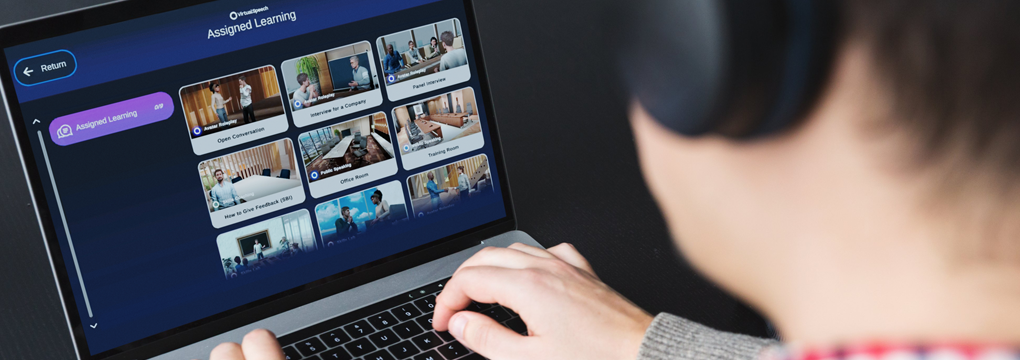
Learning styles describe how people say they prefer to take in information: by seeing, hearing, reading, doing, or working with others. The best-known models are the 8 learning styles and the simpler VAK model (visual, auditory, kinaesthetic).
They are useful as a menu of teaching methods. They are not a reliable way to sort learners: research has found little evidence that matching teaching to someone’s preferred style improves results. This guide covers both models, teaching strategies for each style, and what actually helps adults learn.
What are learning styles?
A learning style is a person’s preferred way of receiving and working with new information. Someone might say they “need to see it” or “learn by doing”.
Preferences are real: most people can tell you which methods they enjoy. What the evidence doesn’t support is the idea that each person learns best only in their preferred style. In practice, most people use several styles, and the right method depends more on what is being learned than on who is learning it.
The 8 learning styles, with teaching strategies
| Learning style | Learns best through | Teaching strategies |
|---|---|---|
| Visual | Images, diagrams, colour | Diagrams, mind maps, colour-coding, video |
| Aural | Sound and listening | Discussion, recordings, mnemonics, rhythm |
| Verbal | Words, spoken and written | Reading, writing, presenting, quizzes |
| Physical (kinaesthetic) | Doing and moving | Hands-on tasks, roleplays, case studies |
| Logical | Reasoning and systems | Problem-solving, data, step-by-step logic |
| Social | Working with others | Group work, peer teaching, group roleplays |
| Solitary | Working alone | Self-paced study, reflection, progress tracking |
| Naturalist | Patterns and classification | Sorting, comparing, real-world observation |
1. Visual learners
Visual learners take in information through images, diagrams and spatial layout. Use visual aids, colour-coding and mind maps, and turn processes into flowcharts. Short videos and digital storytelling help them hold on to key points. Avoid long blocks of text on slides.
2. Aural learners
Aural learners prefer sound: listening, discussing and hearing ideas explained. Build in discussion, ask learners to explain ideas to a partner, and offer recorded sessions. Mnemonics and rhythm help them remember lists and sequences.
3. Verbal learners
Verbal learners learn through words, both reading and speaking. Give them written summaries, ask them to write and present, and use quizzes. Short speaking tasks, such as delivering an elevator pitch, work well.
4. Physical (kinaesthetic) learners
Physical learners learn by doing. Use hands-on activities, case studies and roleplays, and let them practise a skill rather than read about it. Asking them to teach the topic to someone else also works.
5. Logical learners
Logical learners look for reasons, patterns and systems. Give them problems to solve, data to analyse and the “why” behind each step. Frameworks and decision trees suit them.
6. Social learners
Social learners learn through interaction. Use group projects, peer feedback, discussion and group roleplays, and pair them with others to explain and challenge ideas.
7. Solitary learners
Solitary learners prefer to work alone at their own pace. Give them self-paced modules, time to reflect and a way to track their own progress.
8. Naturalist learners
Naturalist learners notice patterns and enjoy sorting and classifying. Use comparisons, categories and real-world observation, and let them group examples themselves.
The VAK learning styles model
The VAK model is a simpler version with three styles: visual, auditory and kinaesthetic. It is widely used in the workplace and adult education because it maps neatly onto three ways of running a session: show it, talk it through, and let people try it.
| VAK style | Signs of this preference | How to teach to it |
|---|---|---|
| Visual | Remembers faces and diagrams, likes written instructions | Visual aids, written key points, colour-coding, “picture this” prompts |
| Auditory | Remembers conversations, thinks out loud | Discussion, paired explanations, reading notes aloud, recorded lessons |
| Kinaesthetic | Fidgets in lectures, learns by trying | Roleplays, hands-on tasks, moving around the room, real-life case studies |
A related model, VARK, adds a fourth style for reading and writing. The practical advice is the same for all of these models: plan sessions that use all three or four channels, rather than splitting learners into groups.
Do learning styles actually work?
Not as a way of matching teaching to learners. Three findings stand out:
- A study at Indiana University School of Medicine found that 67% of students did not study in line with their stated learning style, and those who did got no better grades.
- A 2024 meta-analysis in Frontiers in Psychology of 21 studies found that any benefit from matching instruction to learning styles was too small and inconsistent to justify using it widely.
- The University of Michigan’s online teaching guidance concludes that no study has shown style-matched teaching improves retention or outcomes.
That doesn’t make the styles useless. Varying how you teach keeps people engaged and gives everyone more than one route to the same idea. Just don’t label learners and teach them one way.
What actually helps adults learn
These approaches work across learning styles. Where we can, we’ve backed them with studies that used VirtualSpeech and with our own practice data.
- Practise, don’t just present. Adults learn skills by doing them. In a randomised trial with 288 university students, those who practised speaking in VR for eight weeks reported larger gains in public speaking and group discussion skills than a control group on a traditional programme.
- Give feedback people can use. In a study of 285 students at Maastricht University, those who noticed and understood the feedback from a practice session were more motivated and more likely to use the skills in class.
- Retry straight away after a weak attempt. In our data, people who repeated a practice conversation within an hour improved 63% of the time. Among those who scored below 5 the first time, 80% improved on an immediate retry, by 2 points on average.
- Then space practice out so it sticks. A quick retry fixes the mistake you just made, but spacing builds a skill you keep. A 2026 study of 90 learners and 592 practice attempts found that spreading practice over a longer period predicted how well people performed in real situations; the number of attempts did not. Yet in our data, 37% of people who practised more than once did all of it on a single day.
- Combine channels. Show it, explain it and let people try it in the same session.
- Make it relevant. Use the learner’s own work situations, so the link to their job is obvious.
For more studies on practice-based learning, see our research page.
Realistic practice is where AI roleplays and immersive learning help: learners rehearse real conversations as often as they need and get feedback on each attempt.
Adult learning principles
Malcolm Knowles’ theory of adult learning (andragogy) explains why practice-based methods work so well for adults. A 2024 review in the British Journal of Biomedical Science summarises six principles: adults need to know why they are learning something, are self-directed, bring experience, learn when it is relevant to their lives, prefer solving problems to studying subjects, and are mostly motivated from within.
For more on each, see the characteristics of adult learners. For running sessions, see our guide to facilitation skills for trainers.
Frequently asked questions
What are the 8 learning styles? Visual, aural, verbal, physical (kinaesthetic), logical, social, solitary and naturalist.
What is the VAK model? The VAK model groups learning preferences into three styles: visual (seeing), auditory (hearing) and kinaesthetic (doing).
What are the 4 learning styles? The four styles in the VARK model are visual, auditory, reading and writing, and kinaesthetic.
Are learning styles real? People do have preferences, but research has found little evidence that teaching to a person’s preferred style improves how much they learn. Using a mix of methods works better.
How do adults learn best? Adults learn best through relevant, practical tasks with quick feedback and repeated practice, building on what they already know.
How we did this analysis
We looked at 4,544 first and second attempts at the same AI roleplay by 1,459 people on VirtualSpeech, from 1 May to 23 October 2026. We counted individual accounts only, excluding anonymous trials, internal accounts and shared headset logins. Scores are generated by AI on a 0–10 scale.
Immediate retries partly reflect a rebound effect: people who start low tend to score higher next time anyway, and people who start high tend to score lower. The external studies are linked above; they all used VirtualSpeech, and two are randomised or controlled.
Related posts: